
Core Features of Energy Efficient Sliding Glass Doors
When selecting patio doors that offer sweeping outdoor views without sacrificing climate control, engineering details matter. Large expanses of glass are often the most thermally vulnerable areas in a building envelope. High-performance units transform this vulnerability into a barrier against extreme heat, humidity, and drafts.
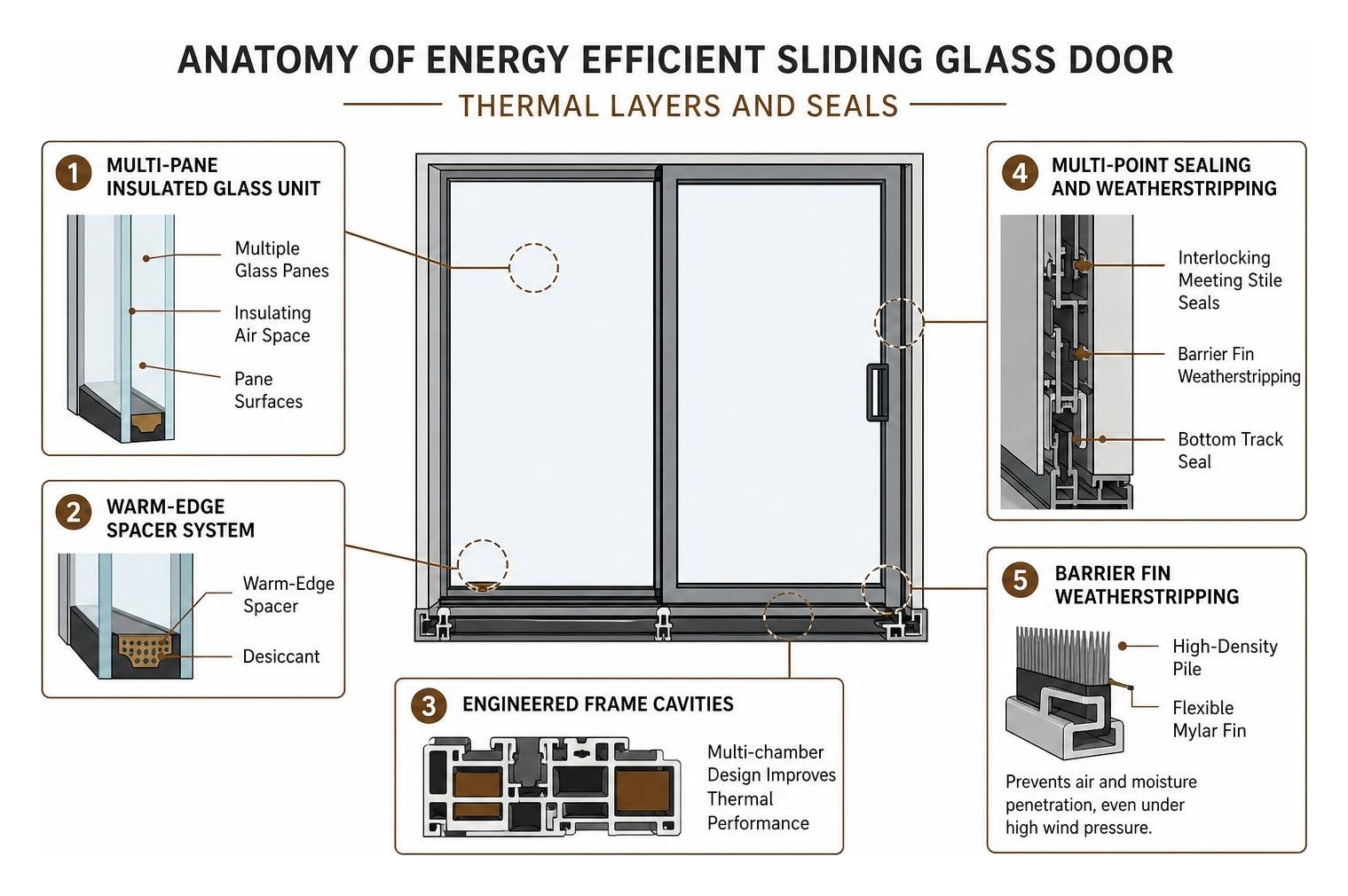
Key performance features work together as an integrated system: multi-pane insulated glass units (IGUs), warm-edge spacer systems, engineered frame cavities, and specialized perimeter seals. Understanding how to create indoor-outdoor connections begins with understanding the thermal barriers that keep outdoor heat from migrating inside.
Multi-Point Sealing and Weatherstripping Systems
Air infiltration is a leading contributor to indoor temperature swings and high cooling loads. Where standard sliding panels allow outdoor air to penetrate along meeting stiles and track edges, high-performance designs incorporate interlocking multi-point sealing assemblies.
- Barrier Fin Weatherstripping: High-density pile weatherstripping reinforced with a flexible Mylar fin prevents air and moisture penetration, even under high wind pressure.
- Bulb Seals: Synthetic rubber or silicone compression bulb seals along the top, bottom, and side jambs compress tightly when the door is closed and locked.
- Dual-Blade Sweeps and Heavy-Duty Interlocks: Interlocking vertical meeting rails fit snugly when panels close, preventing lateral drafts and outdoor humidity from entering the home.
Thermal Breaks and Insulated Profiles
Standard metal frames readily conduct heat from the exterior surface directly into the home—a phenomenon known as thermal bridging. Modern energy-saving doors resolve this with thermally broken profiles. A thermal barrier separates the exterior and interior sections of the frame using a low-conductivity polyamide or structural polyurethane insulator.
To elevate thermal resistance, manufacturers integrate deep frame profiles insulated with graphite polystyrene (GPS) rigid foam, which maintains or improves its insulating value as outdoor temperatures shift. High-performance models, such as the Preferred Sliding Glass Door specifications, combine multi-chambered vinyl profiles with heavy-duty structural reinforcement to maximize thermal efficiency while maintaining structural stability.
Frame Materials and Thermal Performance Comparison
Selecting the right frame material requires balancing structural integrity, low maintenance, and thermal efficiency.
| Frame Material | Thermal Insulation | Structural Strength | Maintenance Level | Resistance to Salt Air & Moisture |
|---|---|---|---|---|
| Vinyl | High | Moderate | Very Low | Excellent (non-corrosive) |
| Fiberglass | Very High | High | Low | Excellent (no rot, swell, or warp) |
| Thermally Broken Aluminum | Moderate to High | Exceptional | Low to Moderate | High (with marine-grade finishes) |
| Wood Composite | High | High | Low | High (resists thermal warping) |
Vinyl and Fiberglass Durability
Vinyl frames feature multi-chambered internal profiles that trap air pockets, functioning as natural thermal insulators. Modern vinyl formulations resist UV discoloration and do not require repainting, making them an effective, low-maintenance option for humid coastal regions.
Fiberglass delivers superior dimensional stability. Because fiberglass expands and contracts at nearly the same rate as the insulated glass units it holds, the perimeter seals experience less stress over decades of temperature shifts. This material will not rot, rust, or warp under intense sun, offering high longevity and strong insulation.
Thermally Improved Aluminum and Composites
For architectural designs featuring oversized panels, corner configurations, or multi-panel pocket systems spanning up to 40 feet, aluminum remains the standard due to its structural strength. Thermally improved aluminum incorporates thermal breaks to disrupt heat conduction across the metal profile.
Proprietary composite materials offer another alternative, providing twice the structural rigidity of standard vinyl while resisting temperatures up to 150°F without warping. These slim, strong frame options allow homeowners to let the light in by maximizing natural light across wide living spaces while maintaining structural stability and energy efficiency.
Advanced Glass Technologies and Energy Performance Ratings
To evaluate door performance objectively, look to independent testing certifications from the National Fenestration Rating Council (NFRC) and the ENERGY STAR® program. Recognizing the technical criteria of these ratings reveals the tangible benefits of building an energy-efficient home.
- U-Factor: Measures the rate of heat transfer through the entire door assembly (typically ranging from 0.15 to 1.20). Lower numbers indicate better insulation against non-solar heat flow.
- Solar Heat Gain Coefficient (SHGC): Measures the fraction of solar radiation admitted through the door (ranging from 0 to 1). Lower numbers mean less unwanted solar heat enters the home.
- Visible Transmittance (VT): Measures the amount of daylight transmitted through the glass (ranging from 0 to 1). Higher numbers allow more natural light into the space.
- Condensation Resistance (CR): Rates an assembly’s resistance to moisture buildup on interior surfaces on a scale of 1 to 100. Higher values reflect better resistance to condensation.
Glass Packages for Energy Efficient Sliding Glass Doors
The insulated glass unit (IGU) makes up roughly 85% to 90% of a sliding door’s surface area, making glass technology crucial to overall performance.

- Low-Emissivity (Low-E) Coatings: Microscopically thin, transparent layers of metal oxide applied to glass reflect infrared heat while letting visible light pass through. In hot climates, soft-coat Low-E on interior surfaces reflects outdoor radiant heat away from the living space.
- Argon and Krypton Gas Fills: Slower-moving inert gases like argon or denser krypton replace standard air between glass panes, significantly reducing conductive and convective heat transfer.
- Warm-Edge Spacers: Structural silicone or composite spacer systems, such as the Super Spacer®, reduce thermal bridging at the perimeter of the glass, raising edge-of-glass temperatures and minimizing condensation.
- Triple-Pane Assemblies: High-performance assemblies, such as high performance triple glazed systems, utilize three panes of glass with dual gas-filled chambers to achieve ultra-low U-factors suitable for strict high-performance building standards.
Impact Resistance and Solar Control for Coastal Homes
In coastal environments, patio doors must protect against severe wind-borne debris while managing intense solar exposure. Impact-resistant sliding glass doors incorporate heavy-duty laminated glass—a tough interlayer of polyvinyl butyral (PVB) or ionoplast bonded between two glass sheets.
When paired with advanced Low-E coatings, laminated glass units block up to 99% of damaging UV rays, protecting fine interior finishes and flooring from fading. These assemblies are a core component of sustainable, cool living engineering strategies designed to lower reliance on mechanical air conditioning.
Architectural Integration, Climate Zones, and Installation Precision
Modern sliding door systems offer architectural versatility, operating as traditional bypass panels, corner-opening systems, or pocket doors that disappear into exterior wall cavities.

Achieving full thermal performance from these systems requires aligning door specifications with regional climate characteristics and adopting comprehensive green building practices.
Selecting Energy Efficient Sliding Glass Doors for Warm Coastal Climates
ENERGY STAR® performance criteria are divided into specific geographic climate zones. In warm southern climates, prioritizing a low Solar Heat Gain Coefficient (SHGC ≤ 0.25) is more critical than optimizing solely for low U-factors. Intense solar radiation drives up indoor temperatures and forces cooling systems to run continuously. Selecting a low SHGC limits radiant heat intake while keeping interior glass surfaces cool to the touch. Exploring the 6 things to consider when building an energy-efficient home helps align door selection with the home’s overall cooling strategy.
Proper Installation and Airtight Sealing
Even the highest-rated patio door will underperform if installed incorrectly. A precision installation requires:
- Level and Plumb Framing: Precision alignment prevents frame racking, ensuring rolling panels seal uniformly against meeting stiles and jambs.
- Integrated Pan Flashing: Heavy-duty sub-sill flashing and sloped drainage pans direct incidental moisture and condensation outside rather than into wall cavities.
- Continuous Perimeter Air Sealing: Low-expansion polyurethane foam and elastomeric joint sealants applied around the rough opening create an airtight seal without distorting the frame.
- Hardware Calibration: Proper adjustment of tandem rollers and multi-point locking hardware ensures smooth operation while compressing perimeter weatherstripping evenly.
Frequently Asked Questions About Patio Door Efficiency
Are sliding patio doors with built-in blinds less energy efficient?
Modern between-the-glass blind systems maintain high energy efficiency. The blinds are sealed inside the insulated glass unit during manufacturing, and magnetic control mechanisms operate the tilt and lift functions without piercing the glass or breaking the gas-tight perimeter seal. Because the blinds sit inside the sealed air space, they reflect solar radiation before it enters the room, helping control solar heat gain without collecting dust or pet hair.
How do sliding patio doors compare to French patio doors in efficiency?
Both door configurations achieve high energy efficiency ratings when properly engineered and certified. Modern sliding patio doors offer an advantage with their continuous perimeter tracks and interlocking vertical meeting rails, which resist racking and wind-driven air infiltration across wide openings. While hinged French doors use compression weatherstripping, broad double-door French assemblies can be more prone to latch-point drafts if hinges sag or settle over time.
What is the expected lifespan and maintenance of modern sliding glass doors?
High-performance sliding patio doors built with vinyl, fiberglass, or thermally broken aluminum frames generally last 20 to 30 years or more. To preserve peak thermal performance and effortless gliding operation:
- Vacuum bottom tracks twice a year to remove sand, dust, and debris that cause roller wear.
- Wipe down frame surfaces and exterior glass using mild soap and water.
- Lubricate tandem rollers and stainless steel tracks annually using a dry silicone spray (avoid petroleum-based lubricants that attract grime).
- Inspect perimeter rubber bulb seals and weatherstripping annually for wear, cracking, or gaps.
Conclusion
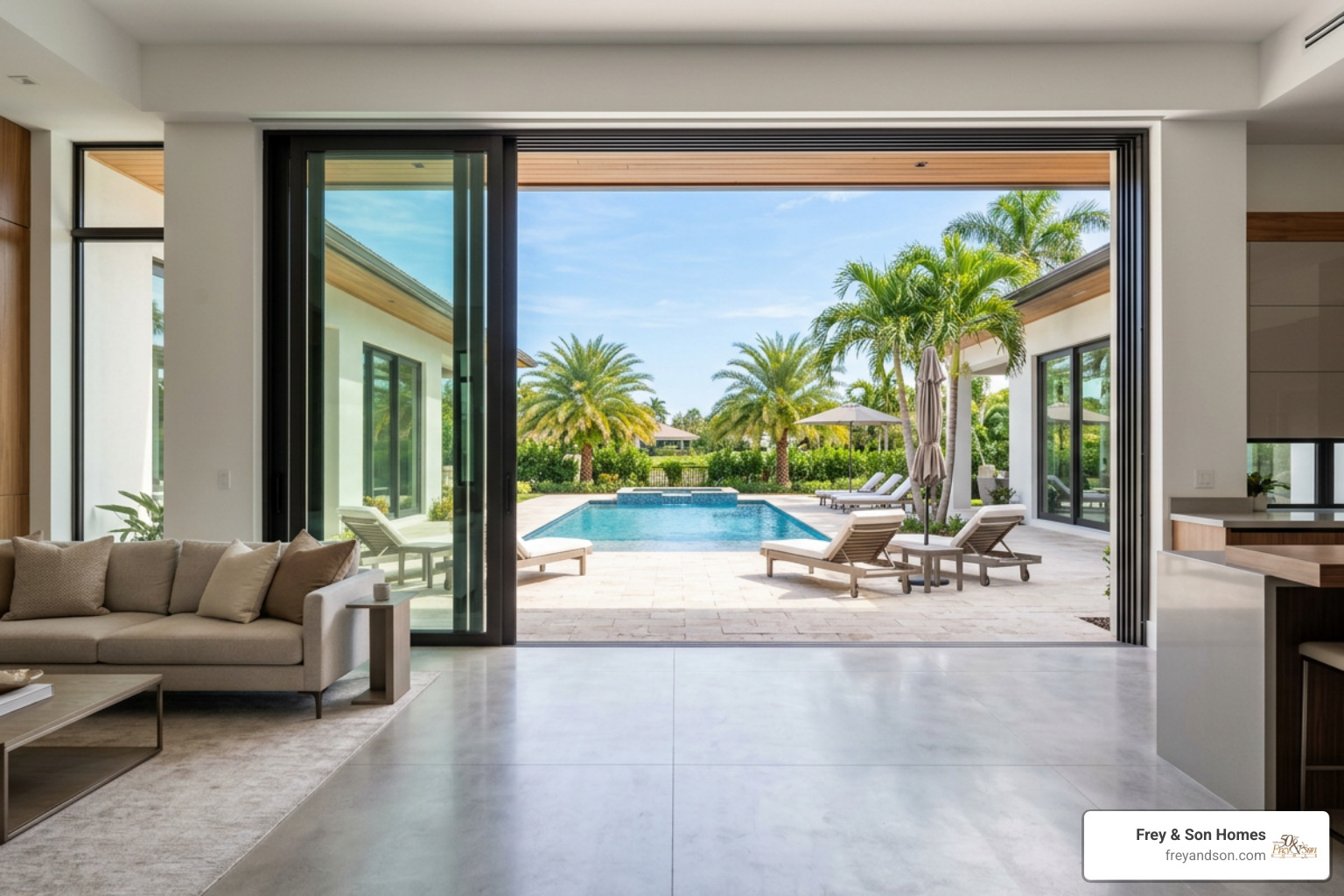
Upgrading to high-performance sliding glass doors creates a seamless connection between indoor comfort and outdoor living. Combining insulated framing profiles, advanced Low-E glass packages, and precision perimeter sealing allows you to maintain panoramic outdoor views while cutting drafts, blocking solar heat, and easing the demand on your air conditioning.
At Frey & Son Homes, we have engineered custom luxury homes across Southwest Florida for over 50 years, integrating storm-smart durability with architectural design. Whether building a new waterfront residence or designing a custom luxury home in Naples, investing in high-performance building systems ensures enduring comfort, security, and long-term property value.