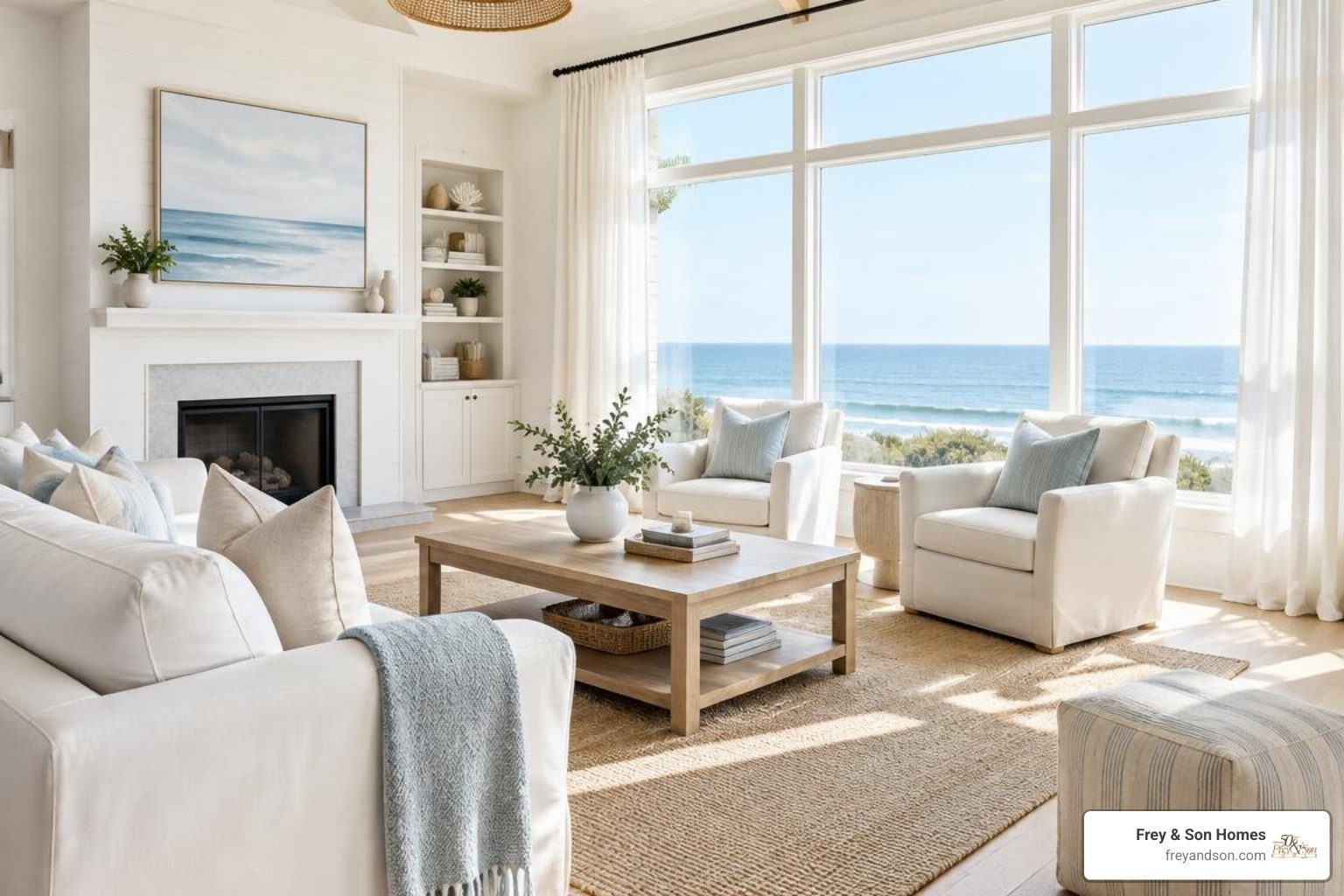
Coastal Interior Design Styles at a Glance
Coastal interior design styles share natural light, comfortable spaces, and materials inspired by the shore. Choose Hamptons for crisp navy and tailored details; California for warm neutrals and clean lines; Australian for sunlit simplicity; nautical for rich wood and maritime accents; tropical for greenery and rattan; or boho for earthy colors and layered patterns. The best fit depends on how you want your home to feel, not how close it is to the water.
In Southwest Florida, views and outdoor living can strengthen any of these looks without making a home feel like a beach theme. I’m Micheal Ouellette, and I’ve spent more than 27 years working in the region’s luxury custom-home market. My experience with coastal interior design styles comes from helping homeowners make design choices that fit their site, lifestyle, and vision.
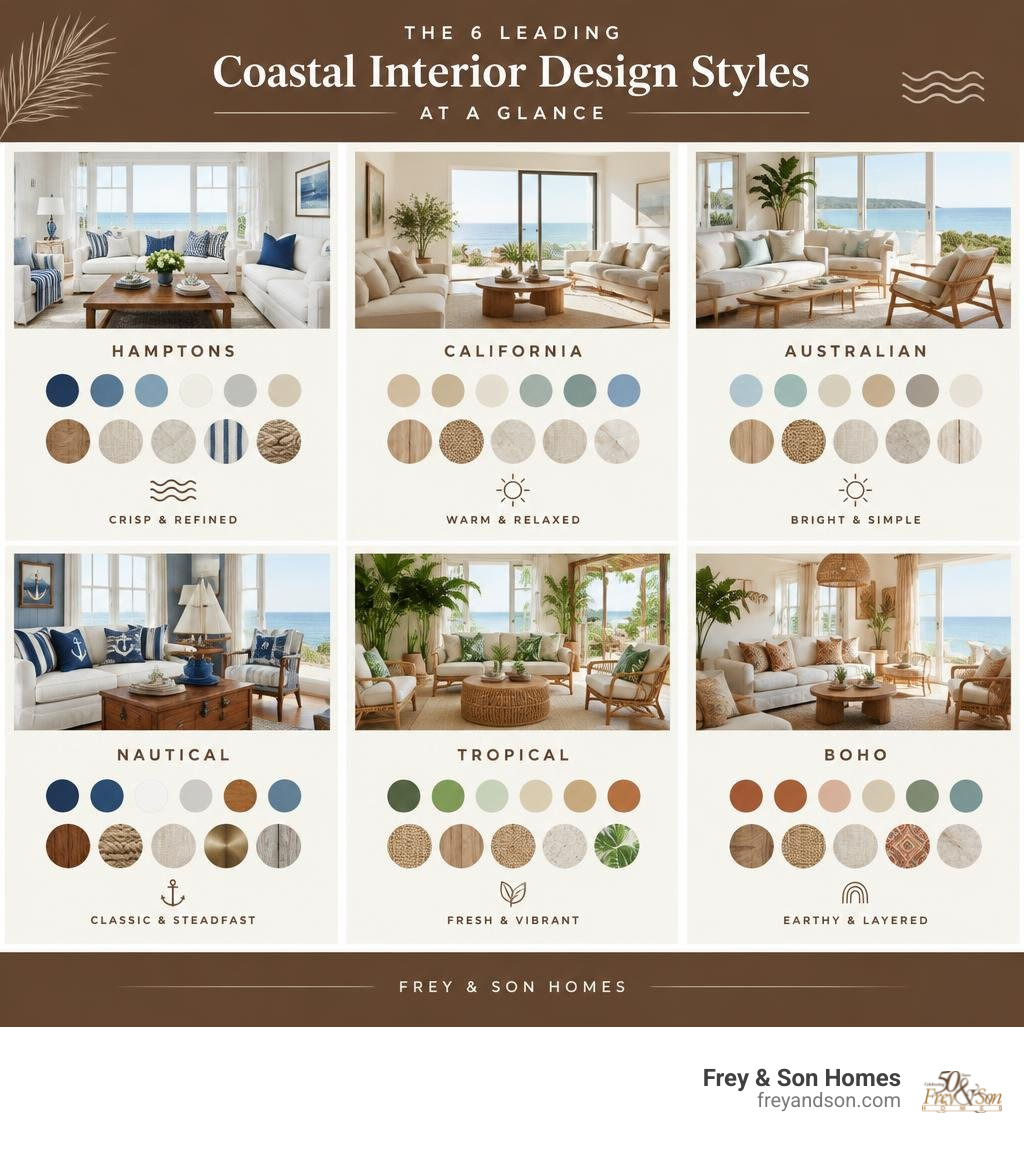
The 6 Leading Coastal Interior Design Styles Explained
Coastal architecture and interior decorating have evolved far beyond the kitschy souvenir aesthetic of decades past. Today, defining coastal interior design centers on capturing the sensory calm of the waterfront: airy volume, organic textures, abundant sunlight, and durable materials that age gracefully in sea breezes.
While every seaside approach shares an appreciation for natural ease, distinct regional aesthetics have emerged across the globe. Understanding these variations helps you pinpoint the right balance of formality, warmth, and texture for your custom home.
| Coastal Style | Primary Color Palette | Signature Materials | Overall Mood & Aesthetic |
|---|---|---|---|
| Hamptons | Crisp navy, chalky white, soft grey, linen | White-painted millwork, marble, unlacquered brass | Formal, tailored, timelessly elegant |
| California Coastal | Warm sand, soft greige, ivory, clay, sage | Wide-plank white oak, limewash, honed limestone, boucle | Relaxed luxury, organic modern, quiet |
| Australian Coastal | Sun-bleached white, bone neutral, timber tones | Bleached oak, light ash, slubby linen, raw ceramics | Minimalist, sun-drenched, effortless |
| Traditional Nautical | Deep navy, ocean blue, bright white, warm bronze | Teak, mahogany, shiplap, woven rope, aged metal | Heritage maritime, tailored, historic |
| Tropical / Island | Soft white, palm green, ocean teal, sandy buff | Rattan, woven bamboo, light linens, exotic hardwoods | Breezy, lush, resort-inspired |
| Boho & Tribal Coastal | Terracotta, dune sand, warm taupe, charcoal | Jute, seagrass, textured pottery, woven mudcloth | Earthy, eclectic, globally collected |
1. Classic American & Hamptons Coastal
Originating along the lavish waterfront estates of Long Island’s South Fork, the Hamptons style represents the more tailored, formal side of seaside decorating. This aesthetic bridges classic American shingle-style architecture with comfortable shoreline living.
Key hallmarks of the Hamptons aesthetic include:
- Architectural Symmetry & Millwork: Defined by classic wainscoting, coffered ceilings, wall panel mouldings, and crisp white shaker trim.
- Tailored Contrast: A structured foundation pairing chalky whites and soft dove greys with crisp navy accents.
- Luxe Finishes: Carrera or Calacatta marble countertops, polished or unlacquered brass hardware, and lantern-style light fixtures.
- Classic Furniture: Deep-cushioned sofas with structured piping, tailored wingback dining chairs, and timeless striped textiles.
This style provides a polished elegance that feels right at home in masterfully appointed waterfront estates throughout Southwest Florida.
2. Modern California Coastal
California coastal design strips away coastal cliches in favor of understated, organic warmth. Rooted in the open floor plans of mid-century architecture and the rustic elegance of coastal Spanish design, this style captures peaceful coastal living without leaning on bright blue accents.
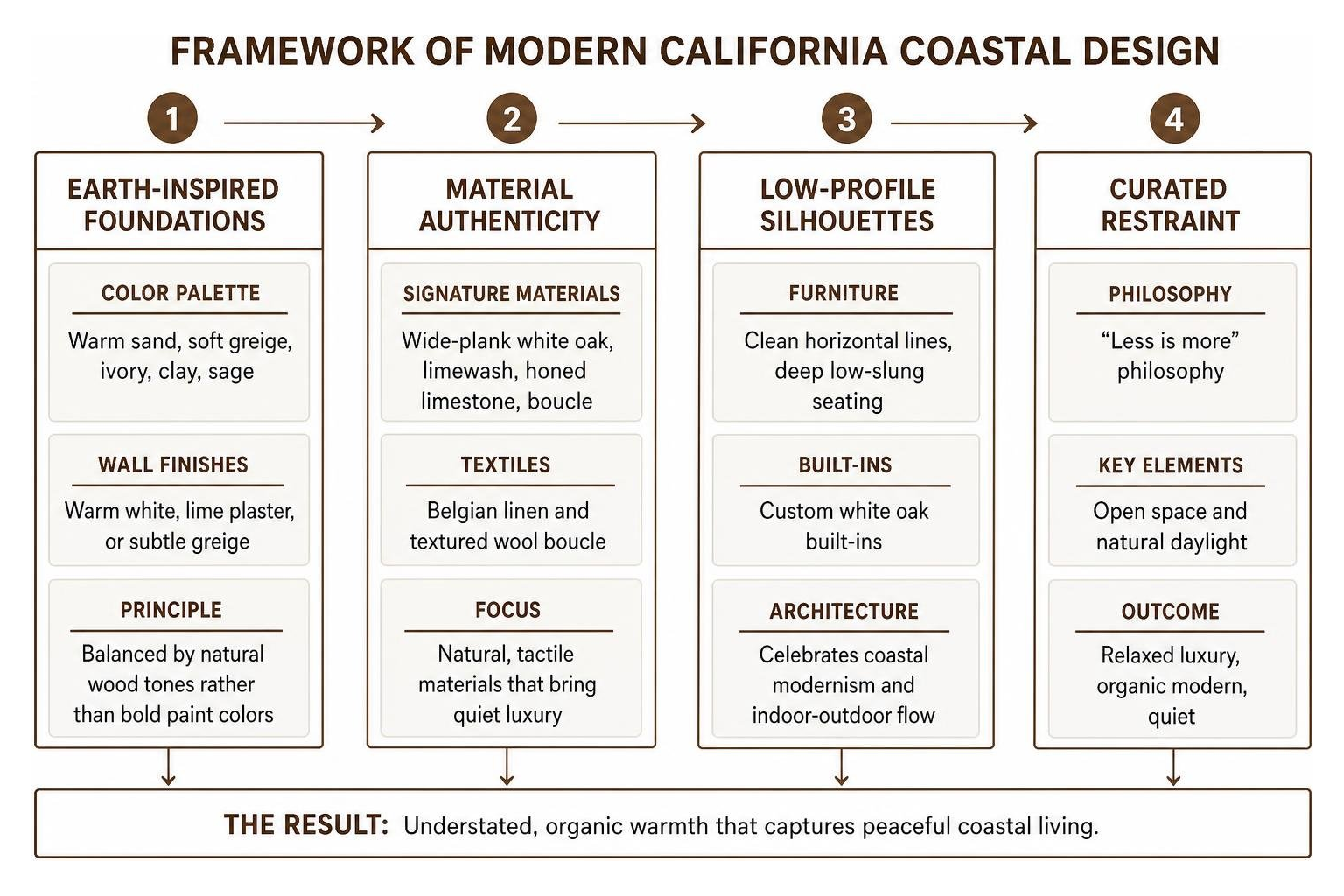
This look focuses on:
- Earth-Inspired Foundations: Walls finished in warm white, lime plaster, or subtle greige, balanced by natural wood tones rather than bold paint colors.
- Material Authenticity: Wide-plank white oak flooring, honed limestone, soapstone, Belgian linen, and textured wool boucle.
- Low-Profile Silhouettes: Furniture with clean horizontal lines, deep low-slung seating, and custom white oak built-ins that celebrate coastal modernism and indoor-outdoor flow.
- Curated Restraint: A “less is more” philosophy where open space and natural daylight act as essential decorative elements.
3. Relaxed Australian Coastal
Australian coastal design is celebrated worldwide for its breezy, sun-drenched minimalism. Highly focused on climate and natural light, it creates an uninterrupted transition between open interior living rooms and covered outdoor terraces.
Core components include:
- Light-toned timber such as bleached oak, blonde ash, and smooth driftwood finishes.
- Generously washed linen slipcovers on low-profile modular sectionals.
- Oversized sliding glass pocket doors that invite prevailing ocean breezes deep into the home.
- Minimalist decorative accents: hand-thrown ceramic vessels, oversized matte bowls, and subtle architectural downlighting.
The result is a clean, organic space that feels effortless, unpretentious, and completely attuned to sunny coastal weather.
4. Traditional Nautical & Maritime
For those who love classic seafaring heritage, traditional nautical design leans into deep maritime history. When done right, it feels like an authentic ship captain’s study rather than a tourist shop.
Elements of sophisticated nautical interiors include:
- Richer Wood Tones: Warm teak, rich walnut, and weathered mahogany paired with tongue-and-groove planking.
- Maritime Palette: Deep sea navy, maritime blue, and crisp sailcloth whites accented with dark brass and oil-rubbed bronze.
- Textural Accents: Thick nautical hemp rope details, authentic glass float lighting, and subtle brass porthole wall mirrors.
- Vintage Artistry: Framed vintage coastal navigation charts, historic marine oil paintings, and handcrafted boat models displayed with refined restraint.
5. Tropical & Island Coastal
Tropical coastal style channels the relaxed luxury of Caribbean villas and South Pacific retreats. This aesthetic is uniquely suited for homes in tropical climates, balancing heat and humidity with breezy, breathable materials.
Hallmarks of this resort-inspired look include:
- Organic Botanicals: Lush interior greenery, such as potted fiddle-leaf figs, bird of paradise, and majesty palms.
- Woven Textures: Natural rattan lounge seating, cane cabinet inserts, woven bamboo shades, and grasscloth wall coverings.
- Airflow Architecture: Wide-louvered plantation shutters, high vaulted ceilings with exposed beams, and woven ceiling fans.
- Palette Choices: Soft sandy whites mixed with sea-glass greens, muted palm tones, and subtle coral undertones.
6. Boho & Tribal Coastal
If you prefer an earthy, artisanal aesthetic, Boho (or Tribal) Coastal pairs seaside textures with globally inspired patterns. This style moves away from classic blues, embracing warmer earth tones and handcrafted goods.
Key elements of this aesthetic include:
- Earthy Color Swatches: Terracotta, sun-baked clay, warm ochre, sand dunes, and charcoal accents.
- Artisan Craftsmanship: Handwoven Moroccan rugs, African mudcloth throw pillows, hand-carved wood benches, and woven seagrass baskets.
- Layered Organic Elements: Chunky woven jute floor coverings topped with vintage flatweave rugs, combined with raw stoneware lamps and rattan lighting fixtures.
- Relaxed Eclecticism: A comfortable, collected-over-time atmosphere that feels both artistic and grounded.
Coastal vs. Beachy, Nautical, and Tropical: Understanding the Nuances
It is easy to mix up seaside design terms, but recognizing their differences ensures your home remains refined and timeless:
- Coastal: A broad, sophisticated design category focused on neutral palettes, abundant sunlight, organic textures, and natural indoor-outdoor continuity.
- Beachy: A casual, playful, cottage-like aesthetic that frequently features bright turquoise, weathered pastel paints, and lighthearted shore motifs.
- Nautical: A style rooted in maritime history, characterized by deep navy, crisp contrasts, rich dark woods, brass hardware, and seafaring elements.
- Tropical: An island-inspired style defined by lush botanical patterns, bamboo, rattan, and deep greens, celebrating the warmth and flora of equatorial landscapes.
A timeless luxury home focuses on architectural materials, texture, and light rather than literal themes. When designing for beachfront and shoreline architecture, the architecture itself should frame the natural surroundings, allowing the interior decor to complement the view without competing with it.
Essential Architectural and Material Foundations for Coastal Homes
True coastal elegance starts long before the furniture arrives. It begins with the home’s layout, natural airflow, and structural materials.
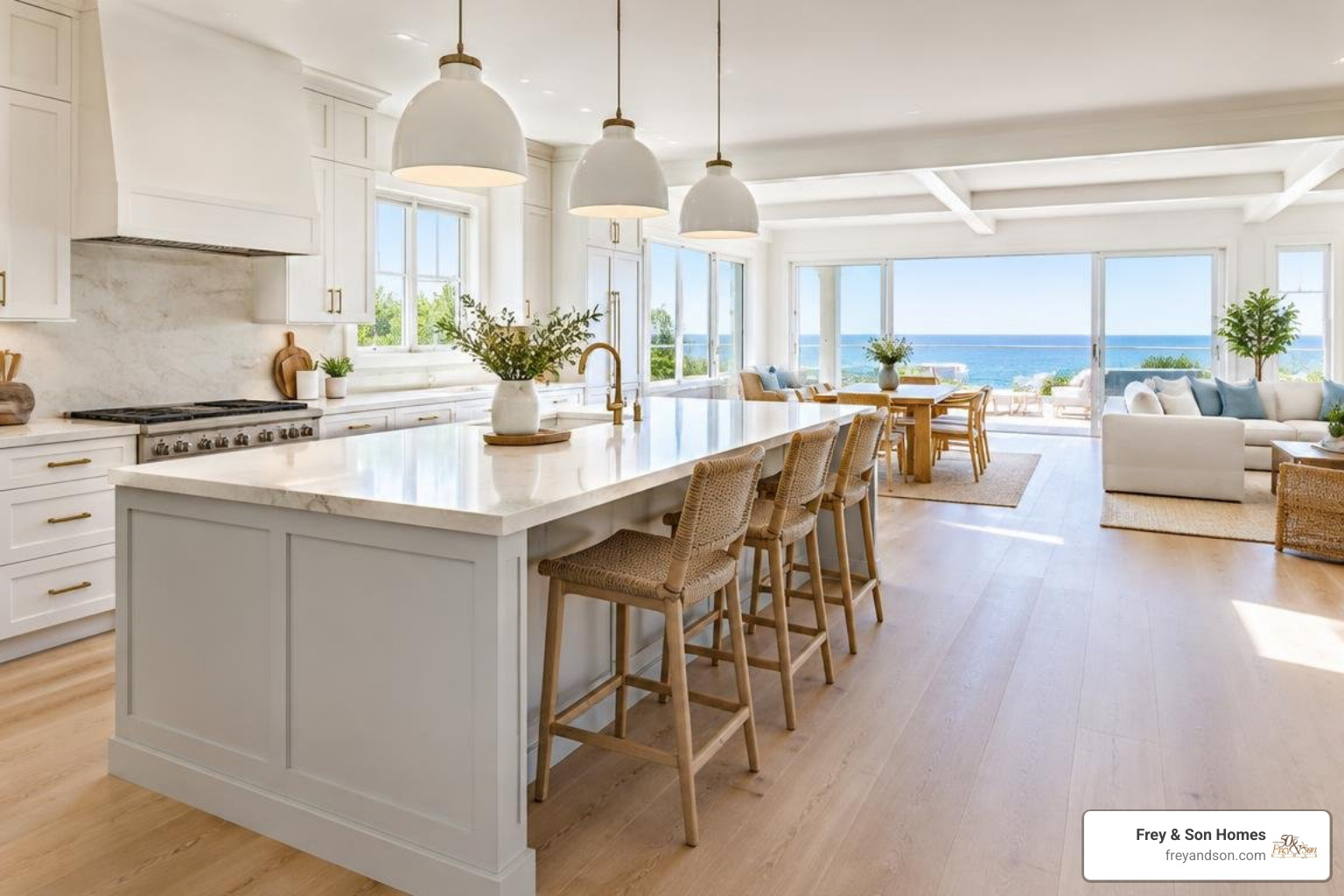
In Southwest Florida, luxury custom home building relies on enduring materials that withstand humidity and salt air while looking effortless year-round:
- Expansive Glazing: High-performance, impact-resistant window systems and high-efficiency multi-slide glass doors that pocket cleanly into the walls to open interior rooms to outdoor terraces.
- Flooring Foundations: Wide-plank white oak engineered hardwoods finished in low-sheen UV oil, or large-format honed limestone and concrete-look porcelain tiles that stay cool underfoot.
- Architectural Millwork: Clean-lined shiplap, vertical nickel-gap paneling, tongue-and-groove ceiling details, and stained timber beams that add texture and structural character to high ceilings.
- Natural Stone: Leathered or honed quartzite countertops, poured terrazzo surfaces, and natural coral stone wall cladding on fireplaces.
- Seamless Outdoor Integration: Expansive luxury outdoor living spaces complete with covered loggias, outdoor kitchens, automated insect screening, and resort-style pool decks.
Choosing Color Palettes for Coastal Interior Design Styles
The key to a successful coastal color palette is drawing inspiration directly from the surrounding natural environment—the sand, sky, water, and shoreline vegetation.
- Foundational Whites & Creams: Chalky white, warm alabaster, and soft ivory reflect sunlight across open floor plans without feeling sterile.
- Sandy Neutrals: Warm taupe, soft greige, dune sand, and driftwood grey provide an earthy, grounding base for furniture and area rugs.
- Oceanic & Sky Hues: Muted sea glass, dusty sage, soft coastal fog, and layered slate-to-navy blues bring the water indoors.
- Earth & Sun Accents: Subtle terracotta, warm amber, and brushed brass add warmth, preventing a light palette from feeling cold or uninviting.
Implementing Coastal Interior Design Styles Room by Room
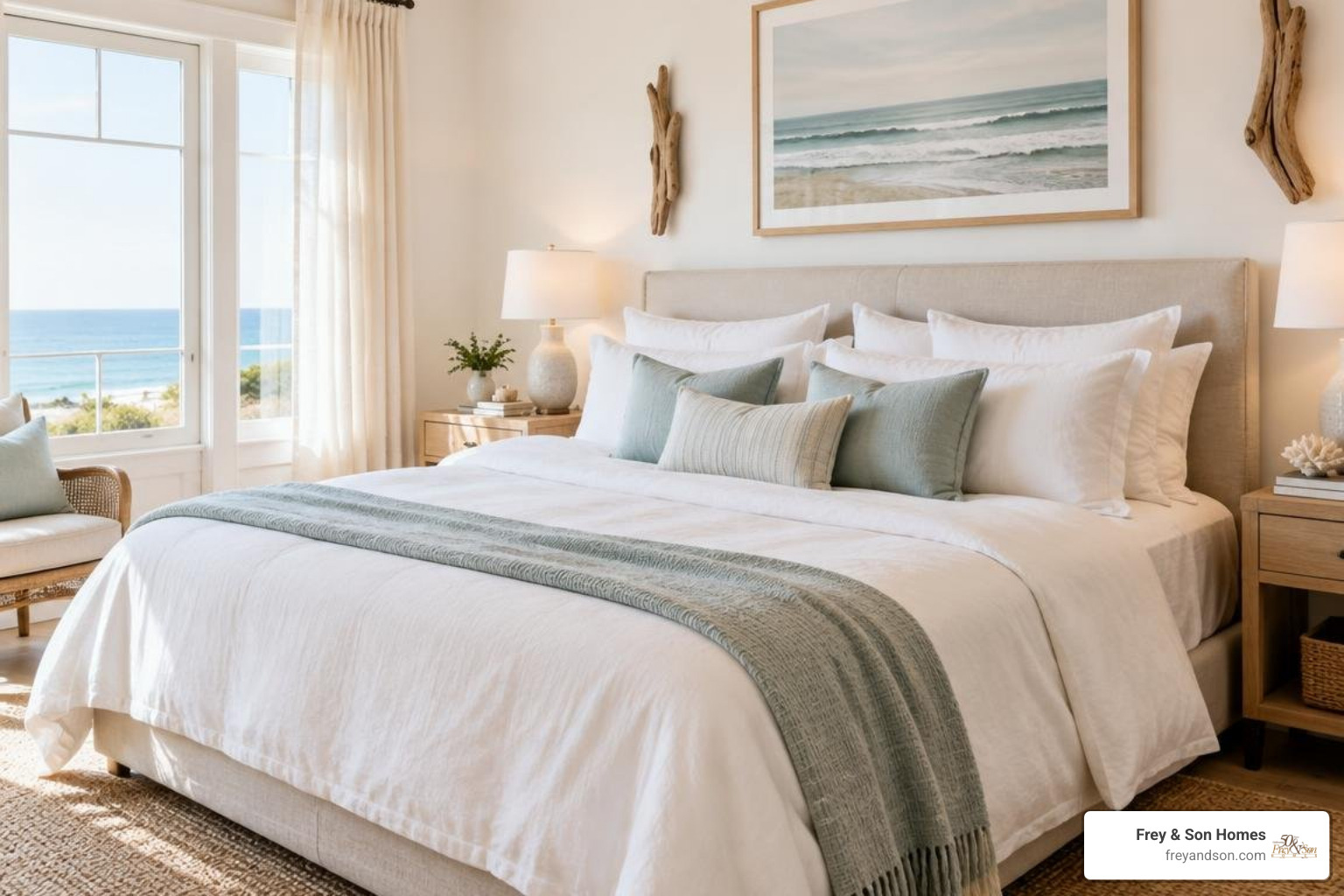
Transforming your home room by room requires balancing functional luxury with casual, breezy materials:
The Coastal Living Room
Anchor the main living area with a generous, low-profile performance linen sectional. Layer in an oversized natural jute or sisal area rug, a solid white oak or travertine coffee table, and woven rattan accent chairs. Keep window drapery light and airy with unlined, ceiling-height Belgian linen shears.
The Coastal Kitchen
Pair custom painted shaker or flat-panel white oak cabinetry with durable quartzite countertops. Add warm brass or matte bronze cabinet hardware, a zellige tile backsplash that gently catches the light, and a pair of woven woven-rope or dome pendants over the kitchen island.
The Primary Bedroom Suite
Design a calm sanctuary using an upholstered or cane-accented bed frame dressed in breathable, washed linen bedding. Incorporate soft ambient wall sconces, floating white oak nightstands, and plantation shutters or motorized solar shades to control natural morning light.
Spa-Inspired Coastal Bathrooms
Emphasize wellness by installing floating double vanities topped with honed natural stone, freestanding soaking tubs framed by coastal views, frameless glass walk-in showers with rain showerheads, and textured pebble or zellige wall tiles.
The Coastal Dining Room
Center the room around an organic-edge light timber dining table flanked by slipcovered or woven wicker dining chairs. Suspend an oversized woven rattan pendant or a minimalist linear brass chandelier above, completing the look with a low-profile buffet topped with hand-thrown ceramic vases.
Common Mistakes to Avoid in Coastal Decorating
Even well-intentioned interior decorating can go awry if coastal elements are overdone. Here are common pitfalls to avoid:
- Literal Seashell and Anchor Overload: Resist the temptation to decorate with obvious beach signs, anchor prints, and shell collections. Let high-end textures and natural materials communicate the coastal feeling instead.
- Sterile All-White Palettes: A monochromatic white room without rich texture, warm wood finishes, and woven accents can end up feeling clinical and cold rather than calm and welcoming.
- Heavy, Ornate Window Drapes: Heavy damasks and dark blackout drapes trap heat, block sunlight, and visually weigh down an otherwise breezy interior.
- Matching Showroom Furniture Sets: Buying an entire matching furniture suite from a single showroom makes a room feel rigid and uninspired. Mix wood tones, woven materials, and different upholstery fabrics for a collected, personalized home.
- Ignoring Salt Air Durability: In Southwest Florida’s humid climate, choosing low-grade polished metals or untreated exterior woods will lead to rapid corrosion and warping. Always opt for marine-grade metals, solution-dyed performance fabrics, and rot-resistant timbers.
Frequently Asked Questions About Coastal Design
How can I achieve a coastal aesthetic in a landlocked home?
You don’t need an ocean view to enjoy coastal decorating. The style is primarily about maximizing natural daylight, selecting an airy color palette of warm whites and sandy tones, and layering organic textures like linen, light oak, jute rugs, and indoor greenery. These choices bring a relaxed, breezy atmosphere to any home.
What is the primary difference between Hamptons and California coastal styles?
Hamptons coastal leans toward traditional elegance, featuring structured architectural millwork, coffered ceilings, polished brass fixtures, and a classic navy-and-white color scheme. California coastal focuses on organic modernism, relying on a neutral palette of warm whites, greige, wide-plank white oak, limewash finishes, and minimalist low-profile furniture.
How do you balance modern minimalism with relaxed coastal warmth?
To keep a minimalist coastal home from feeling sparse or cold, focus on tactile warmth. Combine sleek architectural lines with varied natural textures: slubby linen slipcovers, woven jute floor coverings, brushed brass accents, matte plaster wall finishes, and organic wood furnishings.
Conclusion: Crafting Your Timeless Coastal Haven
Coastal interior decorating is an enduring celebration of light, relaxed comfort, and the natural beauty of the waterfront. Whether you are drawn to the crisp lines of a classic Hamptons estate, the quiet luxury of California modernism, or the breezy openness of an island retreat, authentic seaside style creates a peaceful sanctuary for everyday living.
At Frey & Son Homes, we have spent five decades building luxury custom homes across Southwest Florida—including Naples, Marco Island, Cape Coral, Bonita Springs, Fort Myers, and Punta Gorda. We specialize in uniting world-class architectural design with the distinct lifestyle needs of our coastal region.
Ready to bring your dream coastal home to life? Explore our expert custom home design guidance or browse our available home designs across Southwest Florida to start your journey today.