


For most custom home builds in Southwest Florida, you’ll need a minimum 700 credit score to buy a home. A score of 740 or above typically unlocks the best available interest rates and terms. If you’re planning to finance through a jumbo mortgage or a construction-to-permanent loan, those are the benchmarks worth knowing before you start.
Most of the credit score advice you’ll find online was written for someone buying a $350,000 home using conventional loans. If you’re planning to build or buy a luxury home in Cape Coral, Naples, or Marco Island, that advice only tells part of the story. The credit score to buy a home at this level plays by a different set of rules, and understanding those rules early can save you from surprises during one of the most meaningful decisions of your life.
Custom homes in Southwest Florida almost always exceed the conforming loan limits set by the federal government, which means they fall into jumbo territory. Jumbo mortgage lenders hold these loans on their own books rather than selling them to Fannie Mae or Freddie Mac. That shifts the risk onto the lender, and lenders respond by setting stricter credit score requirements and more detailed financial standards.
Whether you plan to finance through a jumbo mortgage, build a custom home using a construction-to-permanent mortgage loan, or tap into equity from your current home, this article walks through what your credit score means in each scenario, how credit scores affect your loan terms, and what steps you can take right now to strengthen your position.

Why Jumbo Loans Have Different Credit Score Requirements
The dividing line between a conventional mortgage and a jumbo mortgage comes down to the conforming loan limit set annually by the Federal Housing Finance Agency (FHFA). For 2026, that limit is $832,750 in most areas of the country. Any mortgage loan above that threshold is considered a jumbo loan, and the qualification standards change significantly.
Conventional loans generally require a minimum credit score of around 620 for most standard programs. Jumbo loans, because they’re not backed by any government agency, typically require a minimum credit score of 700 or higher, with many lenders setting that as their floor for standard programs. Some lenders are more flexible, accepting a good credit score as low as 680 with strong compensating factors, while others require 720 or higher, depending on the loan size and property type.
This difference matters for buyers in Southwest Florida because homes in Naples, Marco Island, and many parts of Cape Coral routinely exceed the conforming loan limit. That means the credit score standards that applied to your last mortgage may not be sufficient for the home you’re planning to build.
So what does that actually mean for your application? The answer depends on where your score lands.

 What Credit Score Is Needed for a Jumbo Mortgage?
 What Credit Score Is Needed for a Jumbo Mortgage?
When mortgage lenders evaluate a jumbo loan application, credit scores fall into tiers that directly influence approval odds, interest rates, down payment requirements, and reserve standards.
According to Bankrate, borrowers with scores above 740 typically qualify for the most favorable jumbo loan terms and the lowest interest rates available. That’s the target threshold for anyone seeking the best possible pricing on a large loan.
- Scores in the 700 to 739 range are commonly accepted by most jumbo lenders, though borrowers in this range may face slightly higher rates or additional conditions.
- Scores in the 680 to 699 range may be workable with the right compensating factors, such as a larger down payment or a lower debt-to-income ratio, but expect higher rates and stricter requirements across the board.
Below 680, options for jumbo financing narrow considerably. Most won’t accommodate lower credit scores on large loan amounts without very substantial compensating factors, such as exceptional liquid reserves or very low loan-to-value ratios.
It’s also worth noting that requirements can vary by loan size. Some lenders require a score of 720 or higher for loans between $1 million and $1.5 million, and 740 or above for loans in the $1.5 million to $2 million range, according to AmeriSave. If you have a sense of the loan amount you’ll need, it is worth asking potential mortgage lenders about their specific thresholds.
Understanding where your score lands is one thing. Knowing what it costs you in real dollars is another.

How Credit Scores Affect Your Rate and Monthly Payment
Even a modest difference in credit score can translate into meaningful savings over the life of a jumbo loan. Jumbo mortgage lenders price loans based on risk, and a higher credit score signals lower risk. Borrowers with scores of 740 or above consistently receive better interest rates than borrowers with scores in the mid-700s or below.
On a $1 million mortgage, even a quarter of a percentage point difference in the interest rate changes the monthly payment by several hundred dollars and the total interest paid over 30 years by tens of thousands. That’s a direct financial consequence of where your credit score lands on the day you apply.
With that in mind, let’s look at what financing a custom build actually requires, starting with construction-to-permanent loans.
Credit Score Requirements for a Construction-to-Permanent Loan
For buyers planning to build a custom home from the ground up, financing typically comes through a construction-to-permanent loan. This is a single loan that closes once, funds the build through a series of draws paid directly to the builder, and then converts to a standard mortgage when construction is complete. During the building phase, you make interest-only payments based on the funds disbursed. After completion, the loan becomes a traditional amortizing mortgage.
Old National Bank, which specializes in these loans, describes typical expectations clearly: borrowers generally need a credit score of 700 or higher, a down payment of 10 to 30 percent, a debt-to-income ratio of roughly 40 percent or less, and 12 months or more of reserves. These standards are stricter than those for a standard purchase mortgage because lenders take on additional risk when they accept a home that doesn’t yet exist as collateral.
For a jumbo-sized construction-to-permanent loan, which covers most custom builds in Southwest Florida, expect requirements to be at least as conservative as a standard jumbo purchase. Your credit score, income documentation, reserves, and the projected value of the completed home all factor into the lender’s decision.
One important practical detail: your credit documents must stay current throughout the construction period, which often runs 12 to 18 months. That means avoiding new credit accounts, large purchases on credit, or other loan applications between closing and the permanent loan conversion. Protecting your credit profile throughout the build is just as important as qualifying at the start.
For buyers who already have significant equity in their current home, there’s another financing path worth understanding.
 Using Home Equity to Finance Your Southwest Florida Home
 Using Home Equity to Finance Your Southwest Florida Home
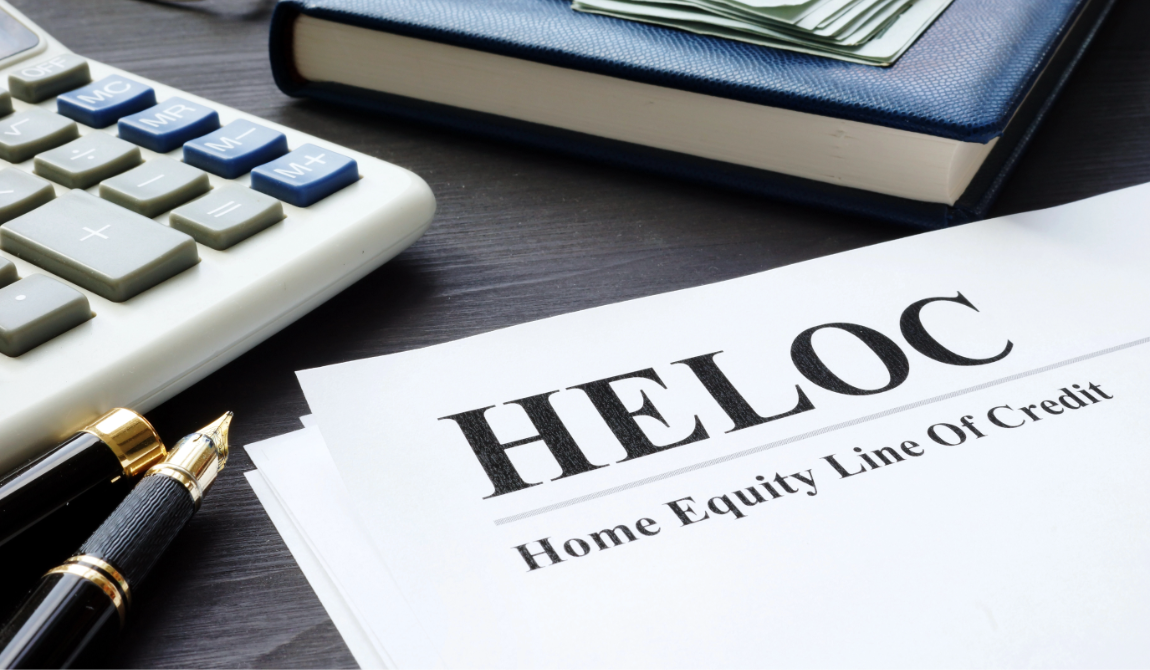
Many buyers in the custom home market use a strategy worth understanding: they tap the equity in their current home through a home equity line of credit (HELOC) or a home equity loan to effectively purchase their Florida home in cash, then repay that balance over time. This approach is particularly common among retirees who own their primary residence outright (or nearly so) and want to avoid the jumbo loan qualification process.
The minimum credit score needed for a HELOC or home equity loan is generally lower than for a jumbo purchase mortgage. Many lenders set their minimum credit score requirement in the 620 to 660 range for home equity products, though some require 680 or above. Scores of 700 and higher tend to unlock the most favorable interest rates and terms.
Alongside a good credit score, lenders look closely at your combined loan-to-value ratio, meaning the total of all loans against a property compared to its appraised value. Most lenders cap this at 80 to 85 percent. Debt-to-income ratios are typically capped at around 43 percent as well.
One strategic consideration worth raising with your financial advisor? If you plan to use a HELOC to fund a Florida home purchase, consider securing that line of credit while you still have W-2 income or strong earned income documentation. After retiring, lower taxable income can make it more difficult to qualify for the full amount you need, even with strong assets. Your payment history on that HELOC will also factor into any mortgage review down the road.
That brings us to a side-by-side look at how credit score requirements compare across all the financing options available to you.

Credit Score Requirements by Loan Type: A Side-by-Side Comparison
Not every buyer will use the same financing approach, and the minimum credit score to buy a home varies meaningfully depending on which path you choose.
| Loan Type | Minimum Score | Best Rates |
| Conventional | 620 | 740+ |
| Jumbo Purchase | 700 | 740+ |
| Construction-to-Permanent | 700 | 740+ |
| Home Equity (HELOC) | 620-660 | 700+ |
FHA, VA, and USDA loans allow lower credit scores but generally don’t apply to custom home purchases in Southwest Florida, which routinely exceed their loan limits. They’re included here for context only.
A consistent theme is that credit score requirements vary by lender, even for the same program. Working with a qualified local mortgage professional who knows the Southwest Florida market is one of the most valuable steps you can take early in your planning process.
According to AmeriSave, the median FICO score for home purchase loans hit a record high of 768 in May 2025, driven by elevated home prices and mortgage rates pricing out lower-credit borrowers.

 Why Credit Scores Still Matter for Cash Buyers
 Why Credit Scores Still Matter for Cash Buyers
In Naples and Marco Island especially, a meaningful portion of custom home purchases are all-cash transactions. Cash buyers aren’t subject to lender credit score requirements at closing, and there is real freedom in that position. But credit scores don’t stop mattering after you hand over the check.
Many retirees who purchase in cash choose to open a HELOC or pursue a cash-out refinance later, whether to fund renovations, handle unexpected expenses, or preserve liquid investment assets for other purposes. Those products require credit scores in the mid-600s or higher for approval and 700 or above for favorable loan terms.
A strong credit history also supports the ability to access favorable rates on any financing you might need in retirement without being forced to liquidate investments at an inopportune time.
Maintaining healthy credit accounts and a clean payment history keeps your financial options open. For someone who has spent decades building wealth intentionally, that flexibility is worth protecting.
That flexibility starts with knowing how to strengthen your score before you ever sit down with a lender.
How to Strengthen Your Credit Score Before Applying
If your credit score isn’t where you want it to be, there is good news. Credit scores respond to deliberate, consistent action over time. The following steps have the most meaningful impact.
Payment history is the single largest component of your FICO score, accounting for roughly 35 percent of the calculation. Making every payment on time, every month, for at least 12 to 24 months, has a significant positive effect. Even one missed payment can cause a noticeable drop, so set up automatic payments where possible and monitor your accounts closely.
Reducing your credit utilization ratio is one of the fastest ways to see improvement. Keeping credit card balances well below 30 percent of your available credit limit (ideally below 10 percent) signals to the credit bureaus that you’re managing revolving credit responsibly. This factor makes up approximately 30 percent of your FICO score.
Avoid opening new credit accounts or making large inquiries in the months before you apply for a mortgage. New accounts and hard inquiries create temporary dips in your score, and the timing of a mortgage application is not the moment to absorb those hits.
Review your credit report from all three major credit bureaus well before you apply. These credit bureaus, Equifax, Experian, and TransUnion, all maintain independent records, and errors aren’t uncommon. Accessing your reports early through a site like AnnualCreditReport.com gives you time to address any inaccuracies before a lender reviews your information.
One point that surprises many buyers? Closing old credit accounts, even accounts you no longer use, can actually hurt your credit report by reducing the average age of your credit history. If you’re in the habit of tidying up your financial life before a major purchase, speak with a credit advisor before closing long-standing accounts.
Building Your Forever Home Starts with the Right Foundation
The home you build in Southwest Florida should reflect the life you’ve worked toward, one with room for family, the lifestyle you love, and the peace of mind that comes from doing things right. Understanding your credit score and how it fits into the financing picture is simply part of that preparation.
At Frey & Son Homes, we have spent more than 50 years guiding families through the custom home building process in Cape Coral, Naples, and Marco Island. We know the questions that come up early, and we know how to help you find the right answers. Our custom home building process is designed to be clear, collaborative, and built around your vision from the very first conversation.
When you’re ready to explore what’s possible, we are here. Reach out to our team to start a conversation about building your forever home in Southwest Florida. No pressure, no rush, just honest guidance from a family that has been doing this for generations.
Frequently Asked Questions
Credit scores, mortgage types, and lending requirements can feel like a lot to sort through, especially when you are planning a purchase of this size. The questions below cover what buyers in Southwest Florida most often ask when researching the financial side of building or buying a luxury home.
What credit score do I need to buy a luxury home in Southwest Florida?
How is a jumbo loan different from a conventional mortgage when it comes to credit score requirements?
What credit score do I need for a construction-to-permanent loan to build a custom home?
Can I get a jumbo mortgage if my credit score is below 700?
How does being retired affect my credit score requirements for a mortgage?
Does paying cash for a home mean I do not need to worry about my credit score?
How many points does my credit score need to be to get the best interest rate on a jumbo loan?
What is the fastest way to improve my credit score before applying for a mortgage?
Do all three credit bureaus report the same score, and which one do mortgage lenders use?
How do HELOC credit score requirements compare to those for a standard mortgage?