Where Coastal Elegance Meets Functionality
Morning sunlight streams through your kitchen windows as your grandchildren gather around the expansive island, watching and giggling while you prepare breakfast. Gulf breezes drift through the open lanai, connecting your indoor space to the outdoor entertaining area where you’ll host this evening’s dinner party.
After 50+ years of creating homes throughout Southwest Florida, we’ve learned that the most cherished kitchens aren’t necessarily the most expensive. They’re the ones designed with intention, balancing coastal elegance with the practical demands of year-round entertaining, Florida’s humid climate, and the desire to create spaces where family naturally gathers.
Your retirement home’s kitchen serves as far more than a place to prepare meals. It’s the backdrop for milestone celebrations and the heart of a home designed to last generations. Getting these custom kitchen designs right requires understanding both what makes your lifestyle unique and what Florida’s coastal environment demands.

Understanding Your Kitchen’s Role in Coastal Florida Living
Year-round sunshine transforms how Floridians use their homes. Southwest Florida residents enjoy seamless indoor-outdoor entertaining throughout the entire year, fundamentally shaping how custom kitchen designs should function.
Your kitchen becomes an extension of your outdoor living areas. Preparing appetizers for pool parties, setting up beverage stations during lanai gatherings, and staging elaborate outdoor dinners all require a layout that facilitates constant flow between spaces.
Second-home considerations also influence design. If you divide time between residences, your Florida kitchen needs to accommodate both intimate dinners and elaborate gatherings when extended family visits.
Why Florida’s Climate Demands Specialized Kitchen Design
Southwest Florida’s subtropical climate creates unique challenges for kitchen materials. Constant humidity, salt air exposure, and intense UV radiation accelerate wear on standard building materials. Custom kitchen designs must account for these environmental factors to ensure your investment remains beautiful for decades.
Humidity levels averaging 70-75% year-round affect everything from cabinetry to countertop materials. Proper countertop material selection becomes crucial, with engineered materials often outperforming natural alternatives in Florida’s climate. Quality construction uses marine-grade materials and proper sealing techniques to combat moisture infiltration that causes wood to warp and finishes to deteriorate.
Salt air compounds these challenges for waterfront properties, accelerating material degradation on metals, natural stones, and unsealed surfaces. Ventilation systems require special attention, with professional-grade range hoods and properly sized exhaust systems preventing moisture buildup that leads to mold growth.
The detail in material selection pays dividends over time. While cheaper alternatives might look comparable initially, Florida’s climate quickly reveals quality differences.

The Commanding Kitchen Island: Your Home’s Natural Gathering Point
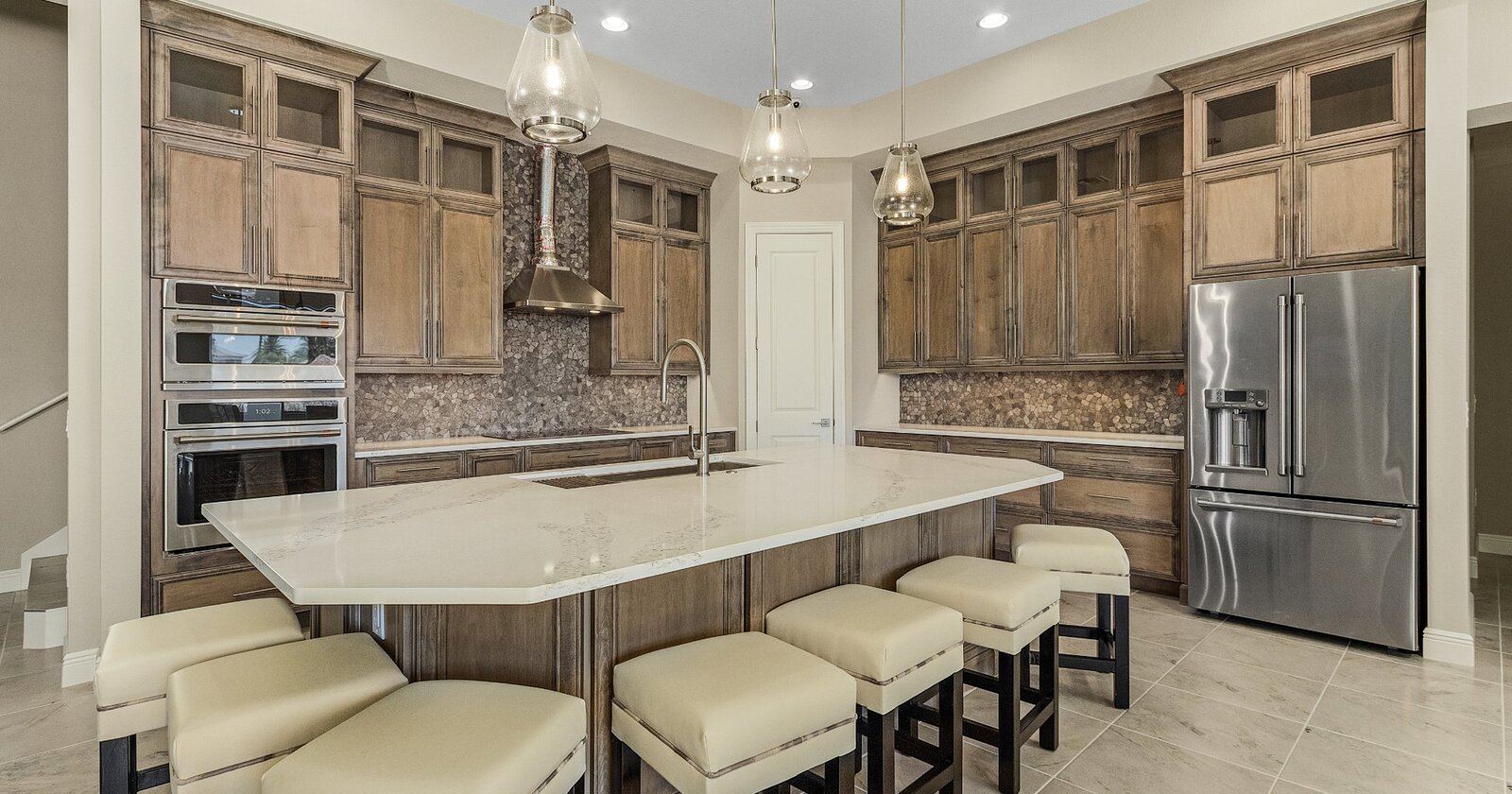
An impressive kitchen island transforms how you use your entire space. For serious entertainers and family-focused retirees, the island becomes the natural hub where people congregate and memories form.
Professional kitchen designers recommend islands measuring at least 6 feet by 3 feet for homes prioritizing entertaining. However, many luxury kitchens benefit from even larger configurations approaching 7 to 9 feet in length. This substantial footprint provides adequate room for food preparation while accommodating comfortable seating.
Seating configurations deserve particular attention. Each person requires approximately 24 inches of width for comfortable dining, meaning a 7-foot island accommodates three seats while an 8-foot configuration handles four. The overhang depth also matters, with 12 to 15 inches providing adequate knee clearance.
Material combinations create visual interest while serving practical purposes. Many custom kitchen designs feature contrasting cabinetry on the island or a dramatic quartz surface that differs from surrounding countertops, establishing the island as a focal point.
Integrating appliances and specialty features requires strategic planning. Secondary sinks expedite food preparation and cleanup, while beverage refrigerators keep drinks accessible. Wine storage, warming drawers, and trash compartments enhance island functionality when positioned thoughtfully.
Pendant lights suspended above the island provide both task lighting and aesthetic appeal. Three pendants typically work well for longer islands, while two suffice for more compact configurations.
Cabinetry Solutions: Maximizing Storage with Coastal Style
Cabinetry consumes the largest portion of most kitchen budgets. In Florida’s humid environment, cabinet materials must resist moisture damage while maintaining their beauty through years of daily use. Marine-grade plywood construction with proper sealing provides superior protection compared to particleboard alternatives.
Custom cabinet configurations address unique storage challenges facing retirees who downsize from larger homes. Without basement storage, every inch of kitchen space becomes valuable real estate for housing cookware, small appliances, and entertaining essentials.
Walk-through pantry designs create substantial storage while maintaining a clean appearance. These dedicated rooms accommodate bulk items and seasonal serving pieces without consuming valuable counter or cabinet space. Deep drawers eliminate hard-to-reach cabinet frustrations, with custom dividers transforming standard drawers into purposeful storage solutions.
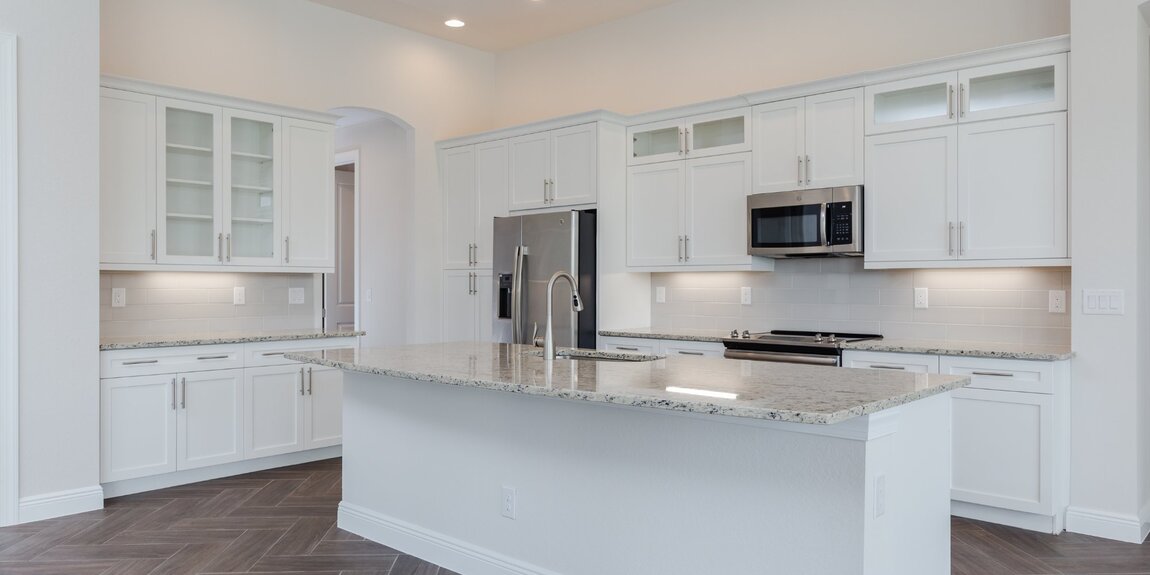
Cabinetry finishes must withstand Florida’s climate while complementing coastal architectural styles. Light to medium wood tones create warmth, while painted cabinetry in soft whites, warm grays, or gentle blues reflects the coastal aesthetic many retirees prefer.
Quality hardware resists the corrosive effects of humidity and salt air while soft-close mechanisms protect cabinet boxes from impact damage.
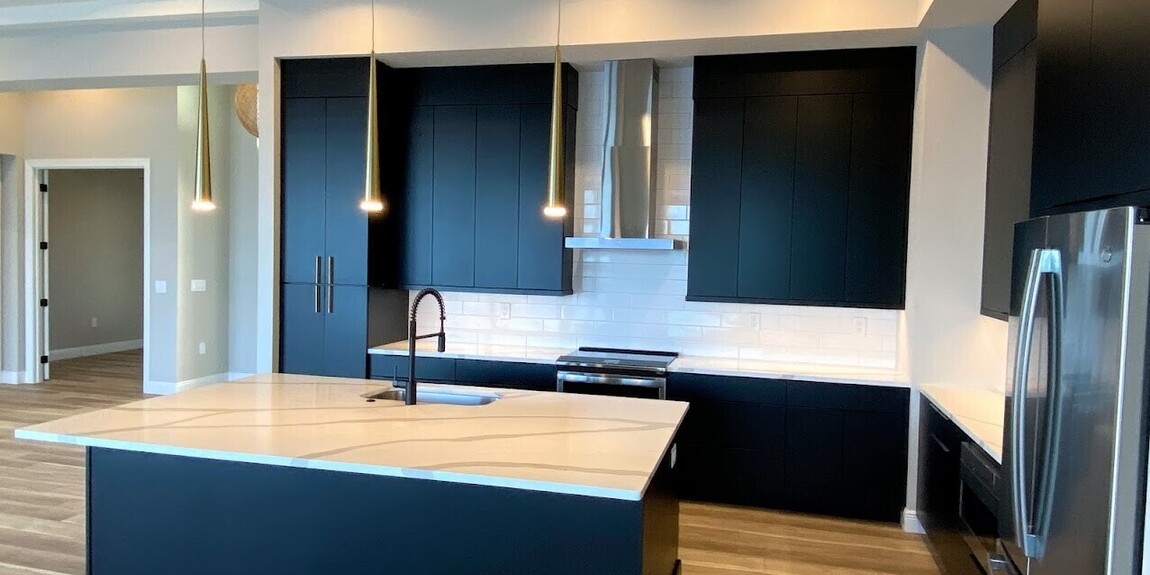
Countertops and Backsplash: Beauty Meets Durability
Countertop material selection requires balancing aesthetic preferences with Florida’s environmental realities. While natural stone brings timeless beauty, engineered alternatives often provide superior performance in coastal climates.
Quartz countertops dominate luxury kitchen installations for compelling reasons. The non-porous surface resists moisture absorption that plagues natural stone in humid environments, making quartz particularly well-suited to Florida applications. The material also resists staining from acidic substances like citrus, which appears frequently in tropical entertaining.
Heat resistance deserves consideration when selecting quartz. While the material withstands normal kitchen temperatures, using trivets and hot pads protects your investment when placing extremely hot pots on the surface.
Marble remains popular for certain applications despite requiring more maintenance. The naturally cool surface makes marble ideal for baking preparation, while its elegant veining creates visual interest. Granite offers a middle ground, resisting heat effectively while providing unique patterns. However, granite requires periodic sealing to maintain stain resistance.
The backsplash creates an opportunity for artistic expression while protecting walls. Tile remains the most popular backsplash material, offering endless design possibilities through size, pattern, color, and texture variations. Backsplash installation should extend behind the cooktop area from counter to hood, creating a visual focal point.
Kitchen Layout: Optimizing Flow and Functionality
Efficient kitchen layout transforms cooking from a chore into an enjoyable experience. The classic work triangle connects your sink, stove, and refrigerator in a configuration that minimizes wasted steps. While this principle dates to the 1940s, it remains relevant for creating efficient custom kitchen designs.
Traditional work triangle guidelines suggest each leg should measure between 4 and 9 feet, with the total perimeter falling between 13 and 26 feet. However, luxury kitchens often expand beyond single-cook configurations, requiring adapted approaches.
Open-concept integration with living spaces demands thoughtful consideration of sight lines. While eliminating walls creates a spacious feeling, cooking activities remain visible to guests, driving some homeowners toward concealed preparation areas where meal staging occurs away from a guest’s view.
Designating a beverage preparation area separate from the main cooking zone allows one person to make coffee without interfering with food preparation. Connection to outdoor living spaces influences layout decisions, with large pass-through windows or doors eliminating barriers between indoor and outdoor entertaining areas.
Traffic patterns require particular attention. The space between the island and perimeter counters should accommodate two people passing comfortably, typically 42 to 48 inches.
Selecting Professional-Grade Appliances for Your Lifestyle
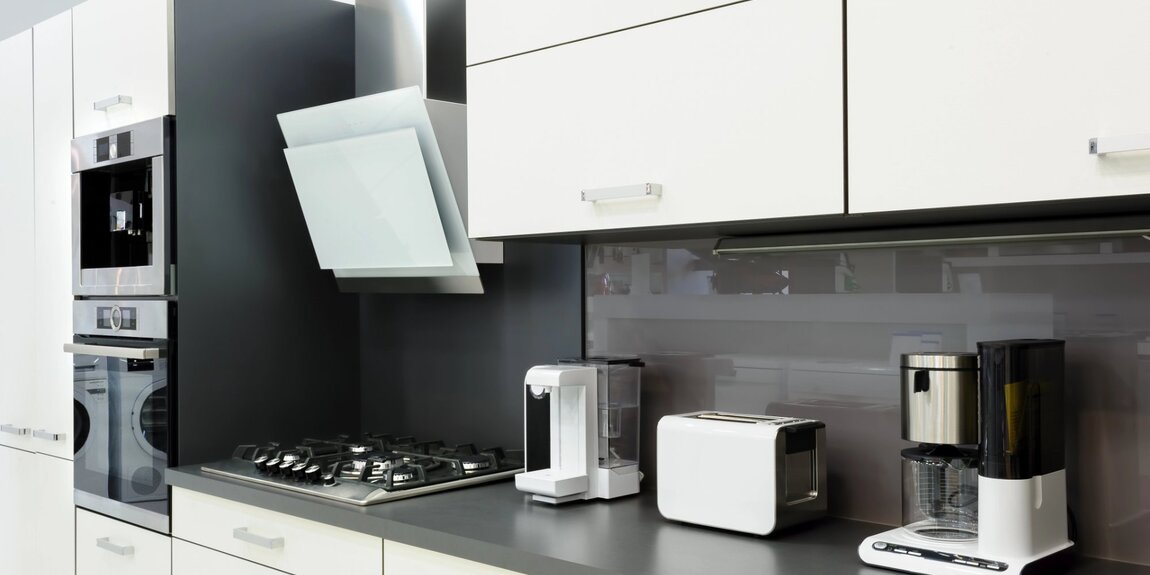
Appliance selection reveals how you actually use your kitchen. Serious home cooks benefit from commercial-style ranges with high-BTU burners and precise temperature control. However, if your cooking style centers on simple preparations, different appliance priorities make sense.
Dual-fuel ranges combine gas cooktops with electric convection ovens, offering responsive heat control for stovetop cooking and even heating for baking. Refrigeration decisions extend beyond simple capacity considerations. Column refrigerators and freezers create a built-in appearance while providing substantial storage.
Secondary refrigeration, whether wine storage or beverage centers, supports entertaining without requiring guests to access your main refrigerator. Energy efficiency matters in Florida, where air conditioning costs consume significant portions of household budgets.
Smart kitchen technology adds convenience through remote monitoring and control capabilities. However, evaluate whether these features genuinely enhance your lifestyle or simply add complexity to appliance operation.

Essential Features for the Serious Cook
Pot filler faucets mounted at the stove eliminate carrying heavy pots filled with water across the room. Multiple sink configurations support efficient workflow, with the main sink handling general cleanup while a smaller prep sink facilitates vegetable washing without interfering with the primary workspace.
Deep drawers dedicated to pot and pan storage transform organization. Rather than stacking items in lower cabinets where retrieval requires bending, drawers provide easy reach access to heavy cookware. Pull-out shelving brings stored items to you rather than requiring you to reach into deep cabinet recesses.
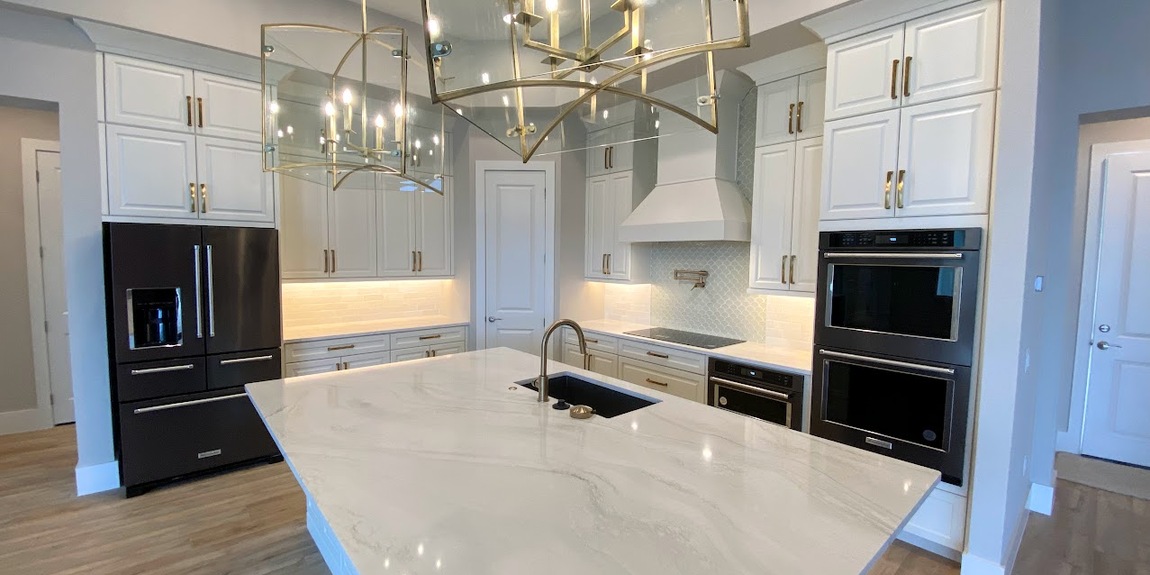
Creating Visual Interest Through Design Details
Custom kitchen interior design succeeds when functional decisions align with aesthetic preferences. The 60-30-10 color rule provides a framework for balanced design. Your dominant color consumes 60 percent of visual space, secondary colors occupy 30 percent, and accent colors comprise the remaining 10 percent.
Natural materials dominate 2026 design trends. Light to medium wood tones bring warmth, while natural stone countertops and backsplashes create organic texture. Curved kitchen islands represent an emerging trend particularly suited to entertainers, promoting better conversation flow compared to traditional rectangular configurations.
Texture layering prevents monotonous design even within simple color palettes. Mixing smooth quartz counters with textured tile backsplash creates visual interest through material contrast. Lighting layers establish appropriate ambiance, with recessed ceiling fixtures providing general illumination, under-cabinet lights supporting food preparation tasks, and pendant fixtures above the island creating focal points.
Budget Considerations and Investment Value
Custom kitchen designs require significant financial investment, typically ranging from tens of thousands to well over six figures depending on size, materials, and appliance selections.
Quality cabinetry construction justifies premium pricing through decades of reliable service. Countertop material selection allows prioritizing certain areas with premium surfaces while using more economical options elsewhere. Appliance packages from single manufacturers often provide better value than mixing brands.
Working with an experienced architectural and design team prevents costly mistakes. Their knowledge of material performance in Florida’s climate, building code requirements, and spatial planning eliminates trial-and-error approaches.
Ready to Explore Custom Kitchen Design Possibilities?
Creating your ideal kitchen begins with understanding how you actually live in the space. The most successful custom kitchen designs reflect your entertaining style, cooking preferences, and vision for family gatherings.
We invite you to experience custom kitchen designs firsthand by visiting our model homes throughout Southwest Florida. Walking through completed spaces provides insights impossible to gain from photos or drawings.
Our architectural and design team brings over 50 years of experience creating luxury homes adapted to Southwest Florida’s coastal environment. Schedule a consultation to discuss how your lifestyle and preferences translate into specific design recommendations.
Exceptional custom kitchen designs in Florida balance coastal elegance with practical functionality. The materials you choose, the layout you select, and the features you incorporate all shape how successfully your kitchen serves both daily living and special occasions.
After 50+ years of creating homes throughout Southwest Florida, we’ve witnessed how the right kitchen design transforms family dynamics. Grandchildren request visits more frequently when they know they’ll gather around your impressive island. These moments represent the true return on investment in custom kitchen designs.
The heart of your home awaits creation. When designed with intention, your custom kitchen becomes the backdrop for thousands of family meals, memorable celebrations, and quiet morning coffee moments that define retirement in paradise. Let’s bring that vision to life with the quality craftsmanship and authentic service that has defined our family business for over half a century.
Frequently Asked Questions
These are some of the most common questions we receive about custom kitchen designs for Florida luxury homes.
What makes custom kitchen designs different from standard builder kitchens?
How long does it take to design and build a custom kitchen in Florida?
What kitchen layout works best for entertaining in Florida homes?
What are the best countertop materials for Florida’s coastal climate?
Can I see examples of custom kitchens before designing mine?
What special considerations exist for custom kitchens in coastal Florida?
How do I maximize storage in a custom kitchen without basements?
What kitchen features are most important for year-round entertaining?
What budget should I expect for a luxury custom kitchen in Southwest Florida?
How does Frey & Son’s design process ensure I get the kitchen I want?